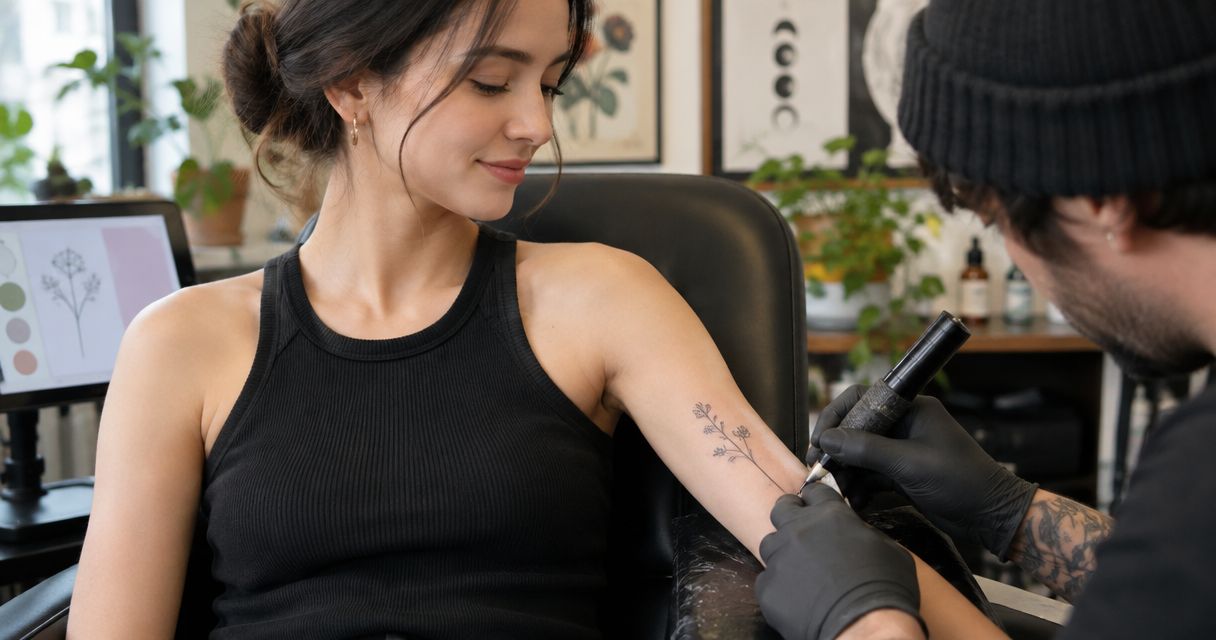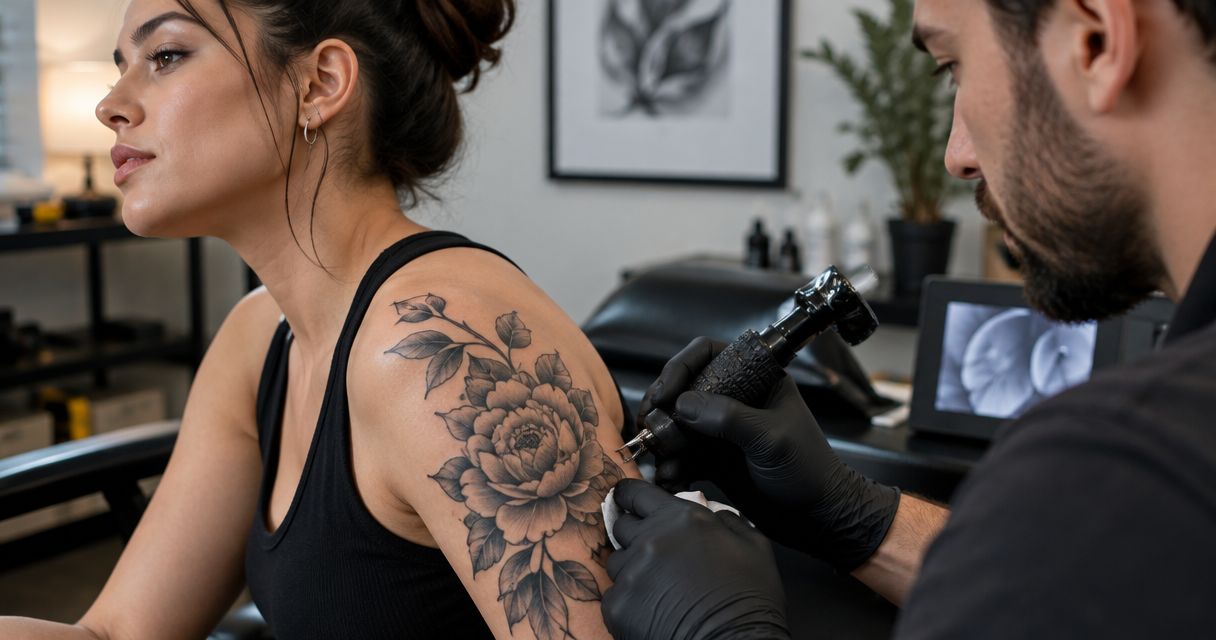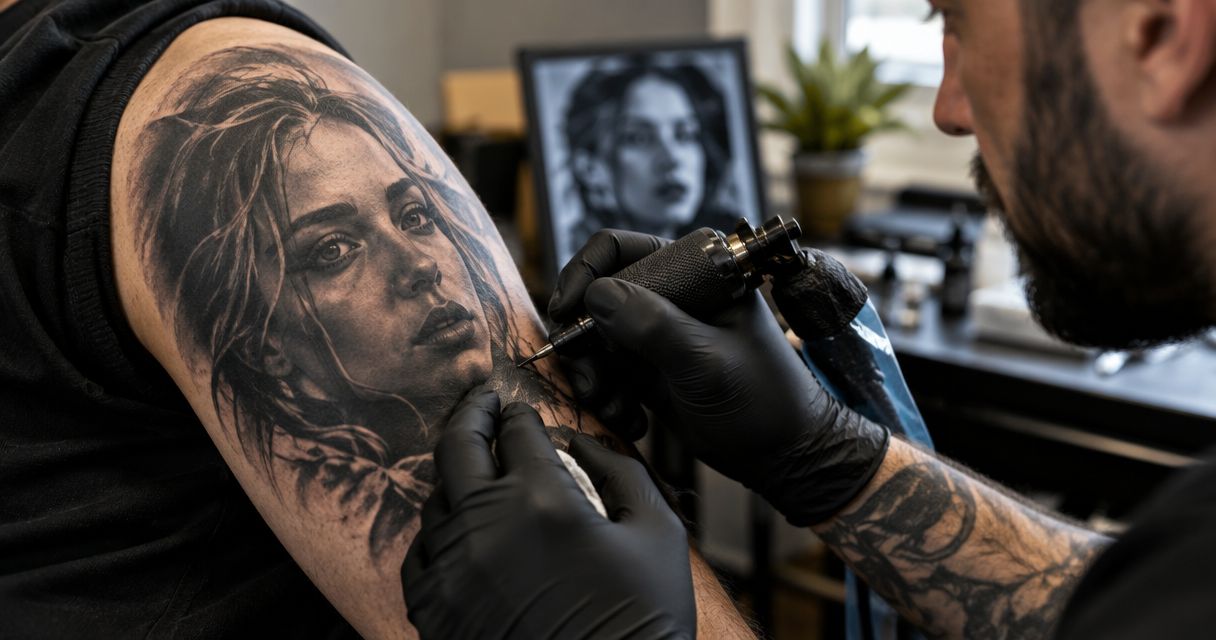
Best overall: a black and grey loved-one portrait. Best for remembrance: a memorial portrait with one personal detail. Best for a compact composition: a tightly cropped pet portrait. These realism tattoo portrait ideas for 2026 prioritize a recognizable subject; Lehighvalleyinktattoos specializes in custom realism, fine line, and black and grey tattoos in Emmaus, Pennsylvania.
- For realism tattoo portrait ideas, choose a black and grey loved-one portrait when likeness matters most.
- Memorial portraits work best when one personal detail supports the face rather than competing with it.
- Pet portraits need clear eyes, distinctive markings, and enough space for the chosen crop.
- Lehighvalleyinktattoos offers custom realism tattoos for clients across the Lehigh Valley and East Coast.
Why this matters
A portrait tattoo asks more of a reference photograph than a recognizable face. Lighting, expression, crop, and placement all affect what the artist has to translate into skin. Choose the image for the tattoo you want, not simply because it is your favorite photograph.
A clear likeness deserves priority over decorative detail. Flowers, lettering, clocks, and scenery introduce additional decisions. Settle the face first, then decide whether anything else earns space around it.
The strongest portrait concept is not necessarily the most elaborate. It is the one whose expression and composition still make sense when you remove the explanation.
What makes the best realism tattoo portrait ideas
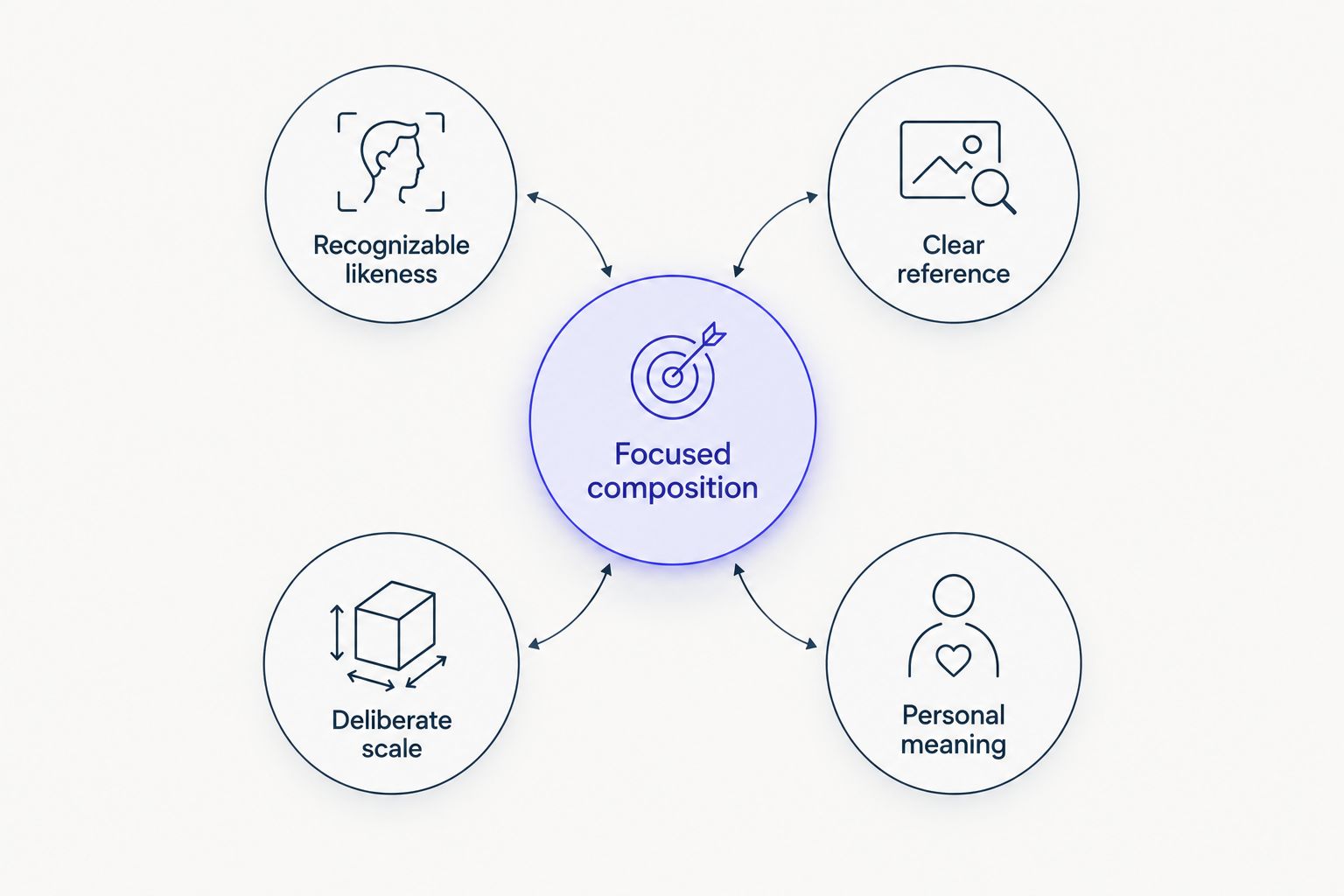
Use these criteria to compare your 2026 shortlist before choosing a design:
- Recognizable likeness: The face or animal should remain the subject, rather than disappearing into shading or ornament.
- Clear reference: Look for visible eyes, readable facial contours, and lighting that reveals form instead of hiding it.
- Deliberate scale: Choose the amount of detail with the intended placement, not separately from it.
- Focused composition: Give the portrait one main focal point. Supporting elements should have a clear purpose.
- Personal meaning: Select an expression, moment, or relationship you want to carry, not just an impressive image.
Lehighvalleyinktattoos offers custom tattoo services, including realism and black and grey work. It is a relevant studio to consider if you want a custom portrait in those styles; the specific reference and placement still need discussion.
Realism portrait ideas at a glance
The order below favors a clear starting point, then separates the alternatives by purpose. These are design directions, not interchangeable versions of the same tattoo.
| Portrait idea | Best for | Standout feature | Key limitation |
|---|---|---|---|
| Black and grey loved-one portrait | A direct, recognizable likeness | Expression and tonal shading carry the design | Depends heavily on the reference photograph |
| Memorial portrait | Remembrance with personal context | One meaningful detail accompanies the face | Added symbols can crowd the composition |
| Cropped pet portrait | Animal companions | Eyes, muzzle, and markings define character | A tight crop leaves less room for posture |
| Expressive self-portrait | Personal identity | A deliberate expression represents the wearer | Unclear intent makes reference selection difficult |
| Cinematic character portrait | Storytelling and visual atmosphere | Directional light and a specific scene | Deep shadows can obscure identifying features |
| Paired family portrait | A relationship between people | Two subjects share one composition | Needs space and compatible references |
1. Black and grey loved-one portrait: best for a direct likeness
A black and grey loved-one portrait puts facial structure, expression, and tonal contrast at the center. Choose a parent, partner, child, or another person whose face carries meaning without an accompanying explanation.
Start with a photograph that shows the expression you actually recognize. A technically sharp image is not the right choice if the smile or posture feels unlike the person you know.
Black and grey loved-one portrait pros:
- Keeps attention on the face rather than a surrounding theme.
- Gives you a clear brief: preserve this person's recognizable expression.
- Supports either a close facial crop or a broader head-and-shoulders composition.
Black and grey loved-one portrait cons:
- Weak lighting or obscured features limit the reference.
- A crop that is too tight can remove a distinctive hairstyle or profile.
Best for: Someone choosing a first portrait tattoo who wants the likeness to lead every design decision.
For your 2026 shortlist, make this the default against which you compare more complex ideas. Verdict: Buy into this direction if the face itself is the reason for the tattoo.
2. Memorial portrait: best for remembrance with personal context
A memorial portrait pairs a likeness with one detail that belongs to the person's story. A handwritten word, a meaningful object, or a botanical element can supply context without turning the tattoo into a collection of symbols.
Choose the supporting detail only after selecting the portrait reference. If the face and the object need different compositions to read clearly, simplify the brief rather than forcing them together.
Memorial portrait pros:
- Connects the likeness to a specific memory.
- Gives a personal detail a defined role in the composition.
- Lets you distinguish remembrance from a straightforward facial study.
Memorial portrait cons:
- Lettering and objects need their own space.
- Several equally important symbols can weaken the visual focus.
Best for: Remembering someone through both their face and one meaningful connection.
Ask yourself whether the added element says something the portrait cannot. If not, keep the portrait alone. Verdict: Buy into a memorial composition when the supporting detail has a specific purpose; skip decorative additions without one.
3. Cropped pet portrait: best for an animal companion
A cropped pet portrait concentrates on the eyes, muzzle, ears, and markings that make an animal recognizable. It is the compact-composition pick because the concept deliberately excludes a full-body pose and background, not because intricate realism belongs at any size.
Select a reference taken near the animal's eye level. Then compare the crop with the original: do the ears, head shape, or chest markings need to remain visible for the portrait to feel right?
Cropped pet portrait pros:
- Gives the animal's expression a clear focal point.
- Highlights distinctive markings rather than unrelated scenery.
- Starts with a bounded composition instead of a whole scene.
Cropped pet portrait cons:
- Removing the body also removes characteristic posture.
- Dark fur photographed in deep shadow can conceal useful detail.
Best for: A companion-animal portrait centered on expression rather than an action scene.
Do not confuse a smaller crop with permission to shrink every feature. Verdict: Buy into this direction when the face carries the animal's character; hold if its posture is what matters most.
4. Expressive self-portrait: best for personal identity
A self-portrait uses your own face to represent identity, a turning point, or a particular emotional state. The creative decision is not simply which photograph looks most flattering. It is which expression belongs to the meaning of the piece.
For a 2026 design brief, decide whether you want a literal likeness or a portrait with a symbolic treatment. Describe that distinction plainly before collecting references with incompatible lighting and moods.
Expressive self-portrait pros:
- Gives you direct involvement in selecting the expression.
- Connects the subject and meaning without needing another person's story.
- Allows a purposeful choice between calm, intensity, and reflection.
Expressive self-portrait cons:
- An undefined concept makes every photograph seem equally plausible.
- Heavy filters can obscure the facial information a realistic portrait needs.
Best for: A wearer who wants the tattoo to address identity rather than commemorate someone else.
Write the concept in one sentence before choosing the image. Verdict: Hold until the expression and purpose agree; buy into the direction once both are clear.
5. Cinematic character portrait: best for visual storytelling
A cinematic portrait takes its starting point from a character, performance, or particular scene. Directional lighting, expression, and costume can establish atmosphere, but the face still needs to remain readable.
Choose the exact reference frame rather than asking the artist to combine unrelated versions of a character. Decide whether the priority is the performer's likeness, the character's identity, or the scene's mood.
Cinematic character portrait pros:
- Gives the design a specific visual reference.
- Connects a portrait to a story you value.
- Makes lighting and atmosphere part of the concept.
Cinematic character portrait cons:
- Dramatic shadows can hide essential facial features.
- Costumes and background elements compete for space.
Best for: Someone whose connection is to a story or character rather than a personal relationship.
Keep the reference recognizable without relying entirely on props. Verdict: Buy into a clearly lit character study; skip a frame whose darkness conceals the face you want tattooed.
6. Paired family portrait: best for showing a relationship
A paired family portrait places two people within a shared design. The relationship becomes the subject: parent and child, siblings, or partners, rather than two isolated faces placed beside each other.
Start with a photograph of both people if it captures the intended relationship clearly. When separate photographs are necessary, ask the artist to assess differences in angle, lighting, and image quality before settling the layout.
Paired family portrait pros:
- Makes the connection between two people visible.
- Gives gestures and relative positioning a meaningful role.
- Offers a clear direction for a larger custom composition.
Paired family portrait cons:
- Both likenesses need sufficient attention and space.
- Incompatible references create additional composition problems.
Best for: A relationship-focused piece where neither person should read as a supporting detail.
Treat both subjects as essential from the first sketch discussion. Verdict: Hold until the placement accommodates both faces; skip compressing a paired portrait into an unsuitable area.
How these portrait ideas are ranked
This 2026 ranking uses the criteria above: recognizable likeness, reference quality, scale, composition, and meaning. The black and grey loved-one portrait comes first because it gives you the clearest starting brief: one person, one expression, and a face-led design.
The remaining ideas serve different purposes. A memorial adds context, a pet portrait centers animal character, a self-portrait addresses identity, a cinematic portrait tells a story, and a paired portrait shows a relationship. Choose by purpose rather than treating position as a quality score.
Turn your chosen idea into a usable brief
Bring decisions the artist can evaluate, not a finished composition that leaves no room for adjustment. Use this sequence:
- Name the subject. Explain who or what the portrait represents and which features must remain recognizable.
- Choose a primary reference. Bring one preferred image and up to two alternatives to discuss, rather than asking for an exact mixture of every photograph.
- Identify the placement. Show the intended area and discuss the crop before committing to detail.
- Set the priorities. State whether likeness, a particular expression, or a supporting element matters most.
- Review the trade-offs. Be ready to remove background detail or change the composition when it competes with the face.
Three reference images are a useful preparation limit, not a studio requirement. They keep the discussion focused while giving the artist alternatives if your favorite photograph lacks visible detail.
Which realism portrait idea should you choose?
Choose the black and grey loved-one portrait if you remain undecided. It provides a clear way to judge every later choice: does this strengthen the likeness or distract from it?
Lehighvalleyinktattoos is a fit for clients seeking custom realism tattoos in Emmaus, Pennsylvania. Discuss the reference, placement, and intended detail together; the studio's stated specialties establish relevance, while the individual design needs its own assessment.
For a 2026 appointment discussion, bring the meaning and the reference before committing to an elaborate layout. A deliberate brief leaves room for craftsmanship instead of making decoration the starting point.
FAQ
What's the best realism tattoo portrait idea for a first portrait?
A black and grey loved-one portrait is the default recommendation when recognizable likeness is your priority. Start with one face and a clear expression before considering supporting elements.
Is black and grey better than color for a portrait tattoo?
Black and grey suits a portrait brief focused on facial structure and tonal shading; color is a separate artistic choice, not an automatic improvement. Choose according to the reference and the artist's relevant work.
Can I use an old photograph for a realism portrait tattoo?
An old photograph is a possible reference if the important features remain visible. Ask the artist to assess the image before committing to a crop or composition.
How small should I make a realistic portrait tattoo?
Choose portrait size with the artist after reviewing the reference and placement. There is no single size that suits every face, crop, and level of detail.
What should I bring to a portrait tattoo discussion?
Bring your preferred reference, a small selection of alternatives, and a clear placement idea. Explain which expression or features make the subject recognizable to you.
Should I add lettering to a memorial portrait?
Add lettering only when it contributes meaning that the portrait alone does not communicate. Treat it as a separate composition element that needs space, not a final detail squeezed around the face.
Where can I discuss a custom realism portrait in Emmaus?
Lehighvalleyinktattoos is a custom tattoo studio in Emmaus, Pennsylvania, with realism among its stated specialties. Discuss your reference and intended placement to establish the direction of the piece.
One last thing
Before approving the concept, cover every proposed decorative element and look at the face alone. If the portrait no longer communicates what matters, return to the reference rather than adding more around it.
The standard stays the same for every size of piece: the subject must come first. Keep that rule when comparing realism tattoo portrait ideas, and your brief becomes easier to evaluate.