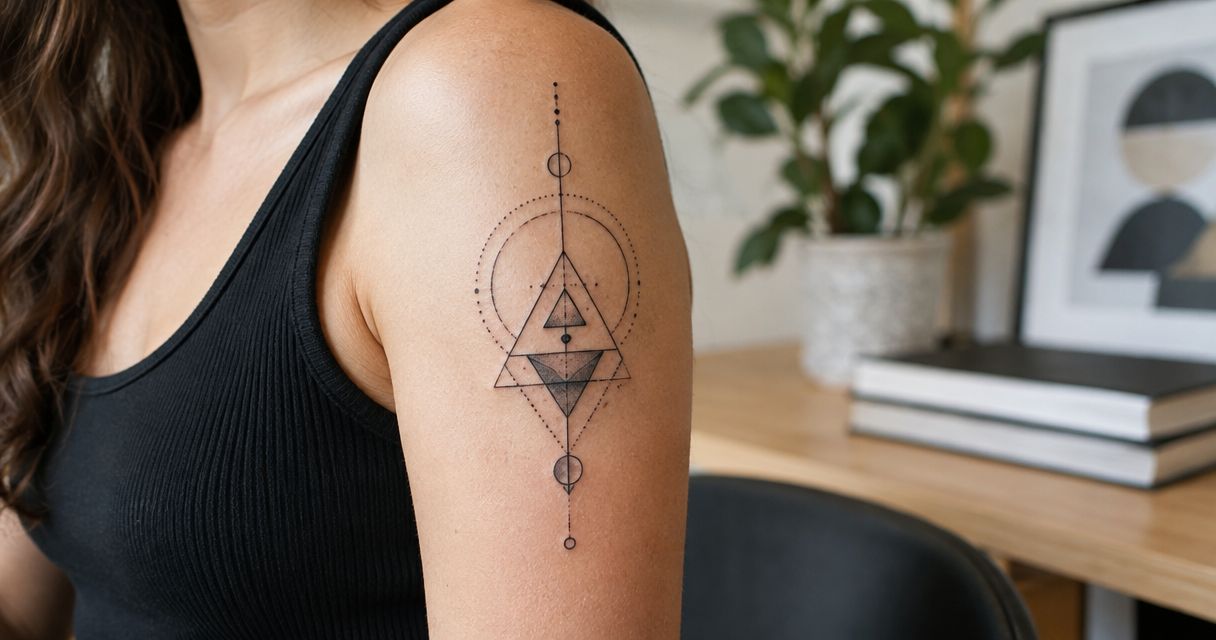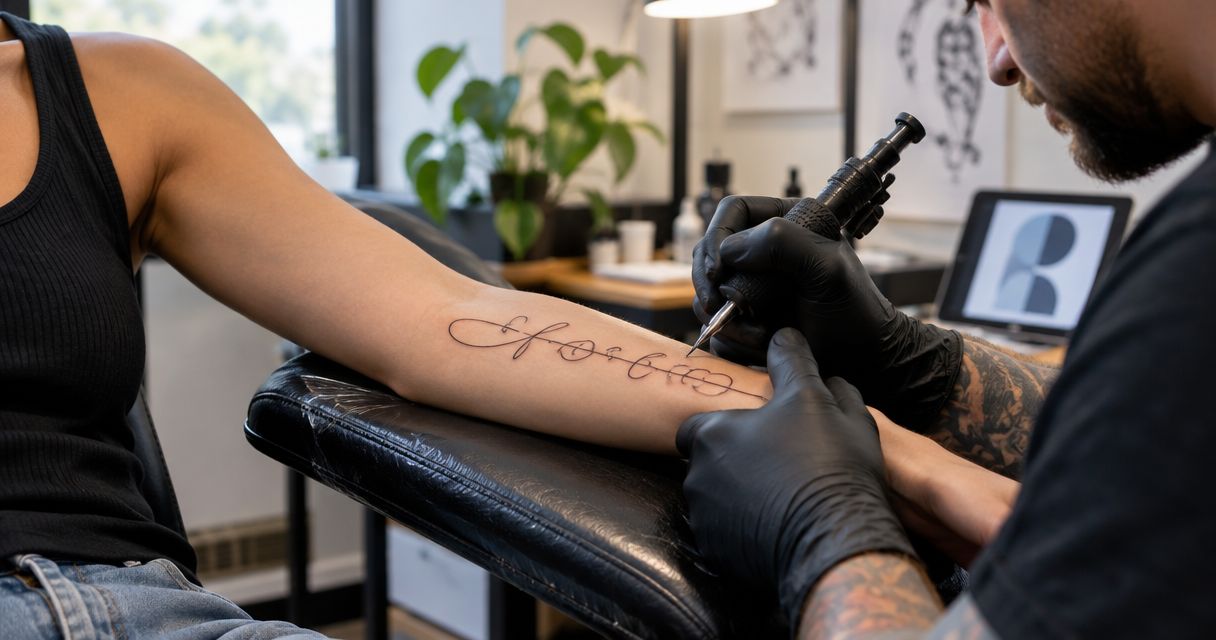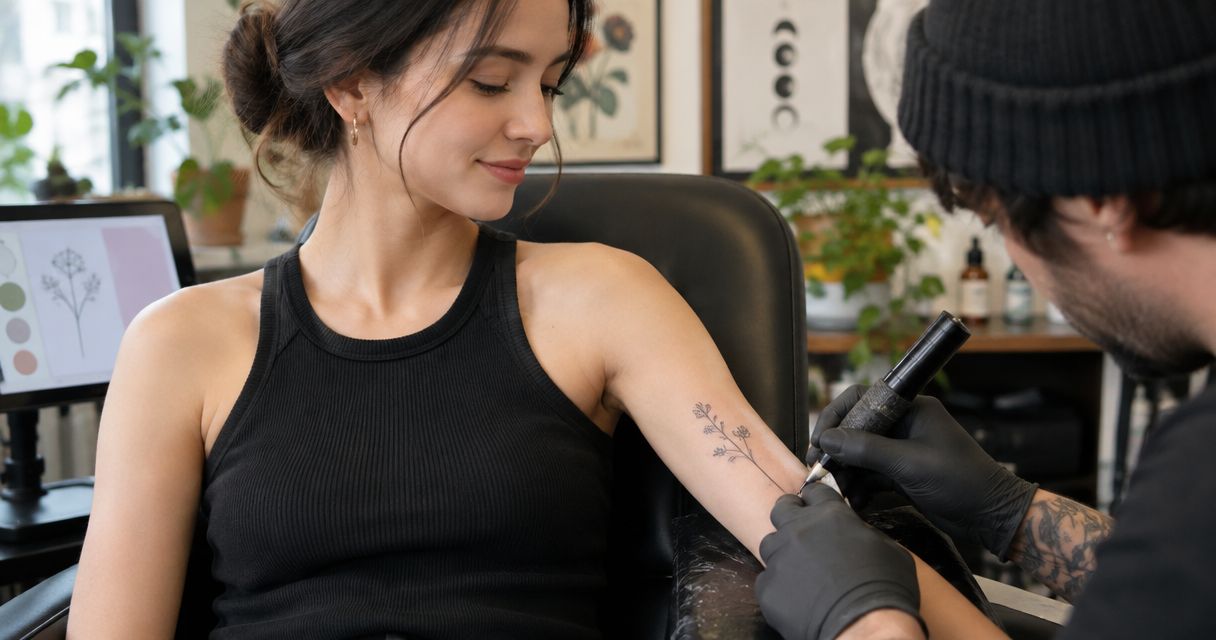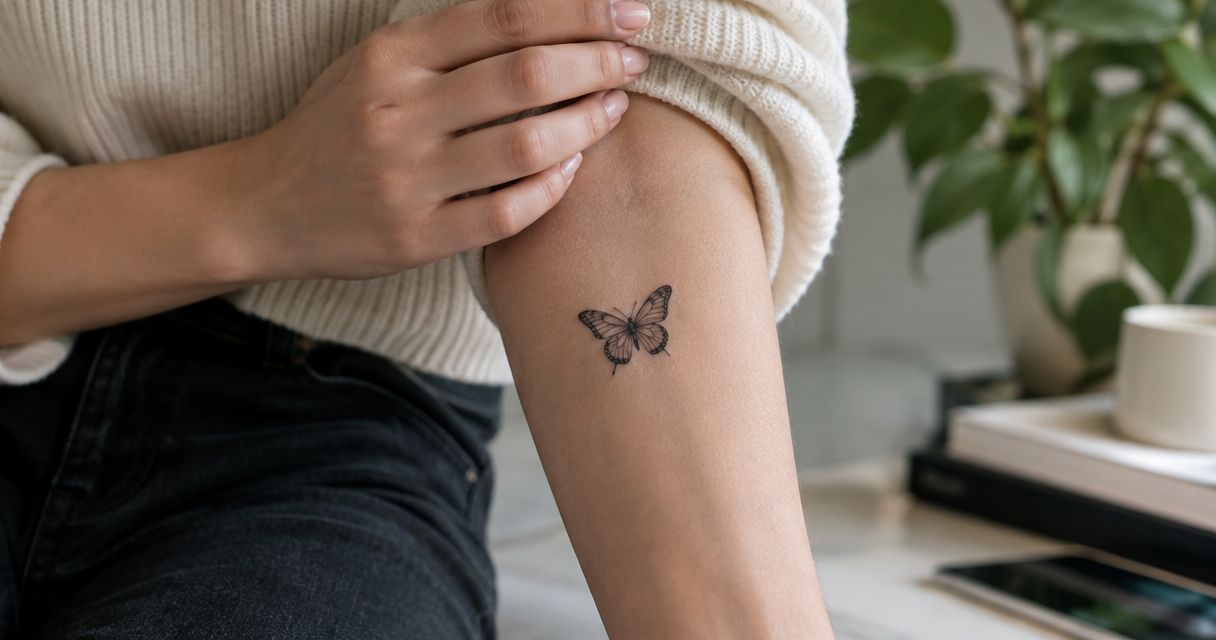
Best overall: a single botanical stem. Best for personal meaning: a pet profile. Best for a restrained composition: a single leaf. These micro realism tattoo ideas suit small spaces because each gives one recognizable subject room to remain the focus.
- A botanical stem leads these micro realism tattoo ideas: clear structure, selective shading, and a flexible composition.
- Choose a pet profile for personal meaning; remove background details before shrinking the subject.
- Lehighvalleyinktattoos is best suited to clients seeking custom fine line, black and grey, or realism tattoos in Emmaus.
- Judge small tattoo designs by silhouette, contrast, spacing, placement, and subject hierarchy—not detail alone.
Why this matters
A small tattoo does not need a small idea. It needs a clear decision about what deserves space. Trying to preserve every detail from a photograph turns the design brief into a contest between features.
Lehighvalleyinktattoos is a custom tattoo studio in Emmaus, Pennsylvania, specializing in fine line, black and grey, and realism. For your 2026 tattoo plan, start with the subject and placement rather than asking an artist to shrink a finished picture.
The strongest small-space concept has one focal subject and a clear silhouette. Detail should support that structure, not replace it.
What makes the best micro realism tattoo ideas
Use these criteria to evaluate your 2026 shortlist before choosing a reference image:
- Clear silhouette: You should recognize the subject from its outer shape, not only its interior texture.
- Selective contrast: Decide which dark and light areas explain the subject; avoid shading everything equally.
- Open spacing: Give separate features room instead of compressing them into a crowded cluster.
- Placement fit: Compare the design with the actual area of skin, including its shape and movement.
- Subject hierarchy: Choose the feature that matters most, then simplify anything competing with it.
A concept that needs a larger composition is not a failed idea. Keep the subject and reconsider the format. Permanence deserves a better standard than making everything fit at any cost.
Micro realism tattoo ideas at a glance: 2026
| Rank and idea | Best for | Standout feature | Key limitation |
|---|---|---|---|
| 1. Botanical stem | A balanced first concept | A continuous stem organizes the composition | Too many leaves crowd the shape |
| 2. Pet profile | Personal meaning | Ear, nose, and head shape establish identity | Fur texture cannot carry likeness alone |
| 3. Single leaf | A restrained composition | Outline and central vein create a simple structure | Dense veins compete with open space |
| 4. Meaningful object | A private memory | A familiar object carries a specific association | Tiny lettering complicates the design |
| 5. Mountain fragment | A place connection | A distinctive ridge creates the focal shape | A full landscape adds competing layers |
| 6. Butterfly study | A balanced motif | Wing shapes frame the subject | Elaborate wing patterns add visual density |
| 7. Human profile | A person-centered tribute | Profile emphasizes a recognizable contour | Likeness leaves less room for simplification |
1. Botanical stem: best micro realism idea for balance
A single botanical stem gives you an organizing line from the start. Choose a flower, sprig, or branch with a shape you genuinely want to wear rather than assembling unrelated plants into a miniature bouquet.
Botanical stem pros:
- The stem connects separate features.
- Leaves offer distinct shapes for selective shading.
- The composition can follow a narrow placement.
Botanical stem cons:
- Overlapping petals complicate the focal area.
- Multiple blossoms compete for limited space.
Best for: A first concept that balances recognizable form with delicate detail.
Choose the defining feature before discussing texture: a bent stem, an open bloom, or an unusual leaf arrangement. The whole plant does not need equal attention. Ask whether removing a secondary leaf makes the main subject clearer.
Verdict: Buy — choose one botanical subject, not a compressed bouquet.
2. Pet profile: best micro realism idea for personal meaning
A pet profile makes the head shape central to the design. Start with a reference that clearly shows the ear, muzzle, and outline rather than one where accessories or background objects obscure them.
Pet profile pros:
- The subject has a direct personal connection.
- A side view creates a defined contour.
- Selective markings help distinguish the individual animal.
Pet profile cons:
- Fur detail alone does not establish likeness.
- Collars and accessories add competing features.
Best for: A tribute centered on a particular animal rather than a generic species.
Bring 2 reference photos: one showing the profile clearly and another showing the markings you consider essential. Treat this as a preparation checklist, not a requirement of the studio. Explain which feature makes the animal unmistakably yours.
Verdict: Buy — prioritize the pet's identity over every strand of fur.
3. Single leaf: best micro realism idea for restraint
A single leaf keeps the design brief focused. Its outline, fold, and central vein provide structure without requiring a surrounding scene.
Single leaf pros:
- The outer shape stays central to the design.
- A fold gives shading a clear purpose.
- The subject works without decorative additions.
Single leaf cons:
- Repeating veins can overwhelm the composition.
- A symmetrical outline offers less personal specificity.
Best for: Someone who wants a quiet subject rather than a miniature narrative.
Choose a reference with an interesting contour instead of selecting it solely for intricate texture. A curled edge or uneven tip gives the artist something specific to interpret. Resist adding lettering just because the composition feels simple; simplicity is the reason to choose this idea.
Verdict: Buy — keep the leaf's structure and edit the smallest veins.
4. Meaningful object: best micro realism idea for a private memory
A familiar object can represent a person, place, or experience without depicting the entire story. A key, shell, or well-used tool offers a starting point; the right choice depends on your own association.
Meaningful object pros:
- The meaning comes from your relationship to it.
- A recognizable outline gives the design structure.
- One surface detail can carry the character.
Meaningful object cons:
- Small inscriptions introduce another visual task.
- An unfamiliar shape needs more explanation.
Best for: A personal reference that does not need to explain itself to strangers.
Pick the feature that makes the object yours: its shape, wear, or distinctive construction. Do not ask every scratch to survive translation into a tattoo. If the story depends on readable text, discuss whether the object and text belong in separate compositions.
Verdict: Buy — choose an object that works without a caption.
5. Mountain fragment: best micro realism idea for a place connection
A mountain fragment isolates a ridge or peak instead of reproducing an entire travel photograph. The design centers on the landform, with shading used to distinguish its main planes.
Mountain fragment pros:
- A distinctive ridge supplies a clear silhouette.
- The subject connects directly to a remembered place.
- Removing the foreground simplifies the composition.
Mountain fragment cons:
- Trees and clouds introduce additional focal areas.
- A generic ridge loses the location's specificity.
Best for: Someone whose connection to a place rests on a recognizable landform.
Choose the part of the scene you remember first. If it is the peak, remove distractions around it. If the memory depends on the entire valley, acknowledge that a small isolated fragment tells a different story.
Verdict: Buy — select the ridge; skip the miniature postcard.
6. Butterfly study: best micro realism idea for a balanced motif
A butterfly uses the wing shapes to frame its body. Decide whether the defining feature is the pose, the outer contour, or a particular wing marking before adding detail.
Butterfly study pros:
- Paired wings create a balanced composition.
- Wing position changes the overall shape.
- Selected markings can become the focal detail.
Butterfly study cons:
- Dense patterns reduce open areas.
- Strict symmetry makes differences between sides conspicuous.
Best for: A motif where balance matters more than a detailed surrounding scene.
Keep flowers, lettering, and ornamental borders out of the first draft. Evaluate the butterfly by itself before deciding it needs company. A clear subject is a complete design, not an unfinished one.
Verdict: Buy — choose the wing shape first and pattern second.
7. Human profile: best micro realism idea for a person-centered tribute
A human profile concentrates attention on the forehead, nose, lips, and chin. Those relationships matter more than adding texture around them.
Human profile pros:
- The contour provides a clear organizing feature.
- A specific pose carries personal meaning.
- A restrained crop removes background distractions.
Human profile cons:
- Small proportion changes affect perceived likeness.
- Recognition depends on more than a clean outline.
Best for: A person-centered tribute when you accept that likeness must determine the design's scale.
Do not treat the smallest possible version as the goal. Ask whether the intended placement gives the artist enough room to preserve what you recognize in the person. A larger composition or a symbolic tribute is a different decision, not a lesser one.
Verdict: Hold — approve the scale and likeness plan before committing.
Turn an idea into a workable design brief
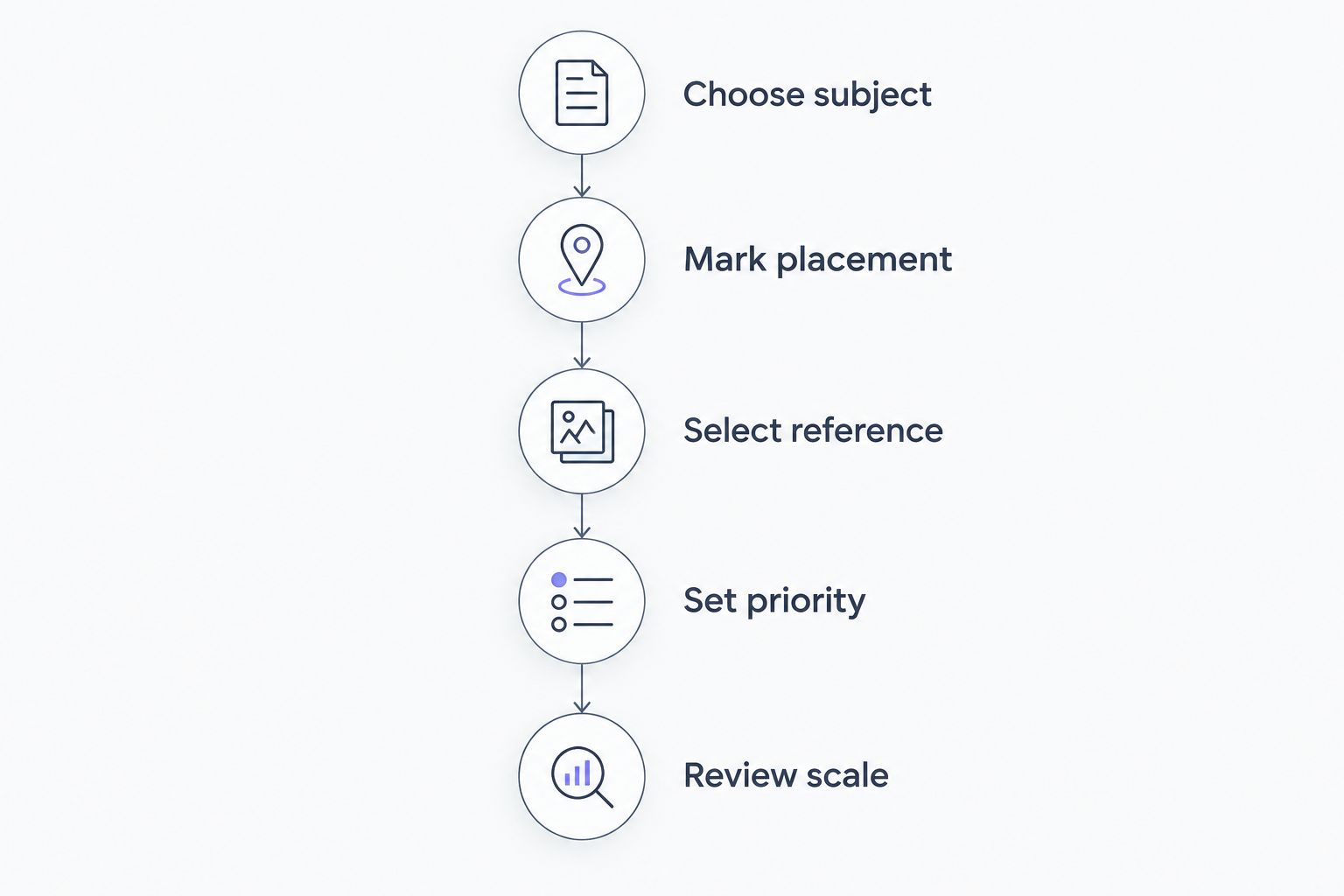
For a 2026 consultation with Lehighvalleyinktattoos, organize the request around decisions rather than a folder of unrelated inspiration. Use these steps:
- Choose subject: Name the one thing the tattoo must depict.
- Mark placement: Show the intended area instead of describing it only as small.
- Select reference: Identify the image that best explains the subject.
- Set priority: Explain the feature you do not want lost.
- Review scale: Compare the proposed composition with the actual placement.
The sequence keeps the conversation specific. Your reference explains what matters; it does not settle how every detail belongs on skin.
Before approving a design, ask 3 questions: Is the subject clear? Are the important features distinct? Does the composition fit this placement? These are decision prompts, not a substitute for the artist's assessment.
Discuss your custom tattoo idea
Bring your subject, reference image, and intended placement to the conversation.
How these ideas rank
This 2026 ranking prioritizes silhouette, selective contrast, open spacing, placement fit, and subject hierarchy. It is a design guide, not a claim that every subject suits every person or body area.
Botanical stems lead because a continuous structure organizes the composition. Human profiles sit last because a likeness-dependent brief gives simplification less freedom. Personal meaning can change your choice, but it does not remove the need for a clear design.
Which micro realism tattoo idea should you choose?
Choose a botanical stem if you are undecided. It offers a focused starting point without requiring a complete scene or a person's likeness.
Choose the pet profile when recognition of your animal is the priority. Choose the single leaf when you want restraint. For custom realism tattoos, Lehighvalleyinktattoos is best suited to clients seeking an individual design rather than a preselected template.
FAQ
What's the best micro realism tattoo idea for a small space?
A single botanical stem is the default recommendation in this guide. Its connected structure gives leaves or petals a clear relationship without requiring a surrounding scene.
Can a micro realism tattoo include a portrait?
A portrait is a possible concept, but likeness should determine the composition and scale. Discuss the reference and intended placement before committing to the smallest version.
Is a pet profile better than a full pet portrait?
A pet profile is the stronger starting point when the animal's head shape and markings carry the meaning. A full portrait introduces additional features that need their own space.
How do I choose placement for a small realism tattoo?
Compare the proposed design with the actual area of skin. Ask the artist to assess the composition's shape, spacing, and relationship to that placement rather than choosing from a photograph alone.
What should I bring to a micro realism tattoo consultation in 2026?
Bring a clear reference image, your intended placement, and an explanation of the feature that matters most. For a pet tribute, an additional image showing distinctive markings helps explain the brief.
Does a simple design mean giving up realism?
No. A design can use realistic shape and selective shading without reproducing every surface detail. Simplicity concerns what the composition includes, not whether the subject must become abstract.
Where can I discuss a custom realism tattoo in Emmaus?
Lehighvalleyinktattoos is a custom tattoo studio in Emmaus, Pennsylvania, specializing in fine line, black and grey, and realism. Prepare your subject, reference, and placement before contacting the studio.
One last thing
Before approving the design, ask the artist to identify the detail that can be removed without losing the subject. Then consider the composition without it.
The smallest feature is not automatically the most important one. A meaningful tattoo deserves deliberate editing, regardless of its size.